How to Grow Zinnias From Seed Without Guesswork
- Start with the packet, not a universal planting date
- Choose direct sowing or a short indoor start
- Direct-sow zinnias step by step
- Start indoors without manufacturing noodles
- Water roots and leave the foliage out of negotiations
- Feed only when the soil has made a case
- Pinch, support, harvest, repeat
- Save seed with realistic expectations
- Keep pets and people in the plan
Start with the packet, not a universal planting date
Zinnias are tender annuals: they grow, flower, set seed, and finish their life cycle in one season, and frost is not part of their preferred itinerary. Sow outdoors after frost danger has passed and soil and air have warmed. Your local extension service's frost-date range and the current forecast are more useful than a social post announcing that “everyone plants zinnias this weekend.” Everyone does not share a climate.
Read the whole packet before opening it. Note the species, cultivar, mature height, days to bloom, sowing depth, and final spacing. Compact border zinnias and tall cutting zinnias may share a genus while requiring different real estate. The packet is also where a responsible supplier places any treatment warning or cultivar-specific instruction.
Illinois Extension describes zinnias as tender annuals best planted when soil and air are warm. Another Illinois Extension guide recommends full sun, well-drained soil, and warm soil for direct sowing. Those are the useful constants; the calendar date remains local.
Choose direct sowing or a short indoor start
Direct sowing is usually the least fussy route. Zinnias germinate readily in warm soil, and placing seed where the plant will grow avoids transplant disturbance. It also lets the seedlings adapt immediately to outdoor light and air. The trade-off is timing: the first flowers arrive later than they may from healthy transplants.
An indoor start can buy several weeks in a short season. The University of Minnesota's cutting-garden guidance suggests starting warm-season flowers including zinnias three to four weeks early, while other extension guidance allows a little longer. Use the packet if it is more specific. Starting months early does not create an heroic zinnia; it creates a tall, crowded houseguest.
Whichever route you choose, sow a second small batch outdoors later if your season is long enough. Succession sowing spreads risk and can extend the harvest. Use the packet's days-to-maturity estimate and your typical first-frost window to decide when a later sowing has become wishful thinking.
Direct-sow zinnias step by step
Choose a site receiving full sun with soil that drains after rain. Remove weeds and loosen only the planting area; a seed bed should be workable, not pulverised into dust. If fertility is unknown, test the soil through a local lab rather than adding a high-nitrogen fertilizer because the bag has a flower on it.
- Water dry soil before sowing and let excess water drain.
- Make shallow holes or a furrow at the depth stated on the packet.
- Place seeds with enough room to identify seedlings, knowing you will thin to final spacing.
- Cover gently and firm the surface so seed contacts soil.
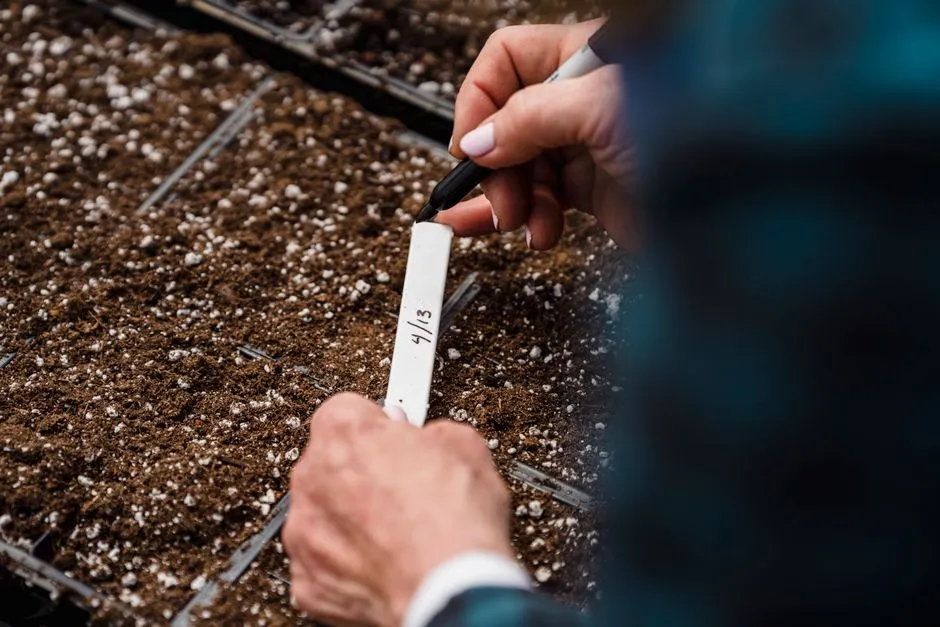
- Label the row with cultivar and sowing date.
- Keep the seed zone evenly moist while germination occurs, without leaving it saturated.
Do not convert every instruction into “one quarter inch” by folklore. Seed lots and suppliers may differ; obey the packet. If heavy rain seals the surface or washes seed away, inspect before resowing. A missing row can mean rot, birds, crusted soil, old seed, or simple displacement. Dig one or two careful samples instead of conducting a full archaeological excavation.
Once several true leaves appear, thin to the cultivar's final spacing. Snip surplus seedlings at soil level if pulling them would disturb the keepers. Crowding may look productive in May, but it restricts airflow, makes harvest awkward, and gives leaf disease a densely furnished apartment.
Start indoors without manufacturing noodles
Use a clean container with drainage and a sterile seed-starting mix, not dense garden soil. Moisten the mix, sow at packet depth, label, and provide the recommended germination warmth. Once seedlings emerge, give them bright, close, consistent light. A sunny window often provides light from one direction and a nightly chill; the result can be seedlings with the posture of a question mark.
Keep the mix moist but not soggy. Bottom watering can reduce disturbance, but drain the tray rather than letting cells sit indefinitely in water. Air movement should be gentle, and seedlings need space as they grow. If roots have filled a small cell before outdoor conditions are ready, move the root ball carefully into a slightly larger container.
Indoor seedlings must be hardened off. Over roughly a week, introduce them gradually to outdoor shade, breeze, and then increasing sun, bringing them in during unsuitable cold or severe weather. UMN Extension recommends a gradual seven-to-ten-day transition. A plant raised under lights cannot be placed in all-day sun and expected to admire the opportunity.
Transplant after frost danger has passed, ideally during mild conditions. Water the root ball, lift it gently, plant at the same depth it grew in the cell, firm soil around it, and water the soil. Protect young plants from slugs, cutworms, or other locally common pests using extension-recommended methods.
Water roots and leave the foliage out of negotiations
Young zinnias need consistent moisture while roots establish. Mature demand varies with heat, wind, rainfall, soil, and container size, so use the soil rather than a rigid weekday as your instrument. Feel below the surface. Water deeply enough to wet the root zone, then allow drainage; do not keep the bed permanently sodden.
Aim water at soil level when practical. Wet foliage does not cause every disease, and powdery mildew does not require free water to infect, but overhead irrigation can still spread some pathogens and prolonged leaf wetness helps others. Watering earlier in the day gives stray splashes time to dry.
Zinnias are notably prone to powdery mildew. University of Minnesota Extension describes white-to-grey powdery patches and notes that shaded, poorly ventilated plant parts are hit hardest. Choose resistant cultivars when labels identify them, provide full sun and packet spacing, remove crowded volunteers, and tolerate minor late-season infection that is not reducing growth or flowering.
Fungicides protect rather than erase existing powdery mildew and must be selected and applied according to the label. Do not spray a home recipe over every pale leaf. Residue, insect feeding, and natural leaf markings can impersonate disease badly enough to deserve identification first.
Feed only when the soil has made a case
Excess nitrogen can create handsome leaves at the expense of a balanced flowering plant and may encourage soft growth. If a soil test recommends nutrients, follow its rate and local guidance. If the bed was recently amended or previously fertilized, more is not automatically better.
This matters across the cutting garden. The same principle helps diagnose cosmos that grow leaves instead of flowers. Fertilizer is a measured input, not garden applause.
Pinch, support, harvest, repeat
Some tall cutting zinnias are pinched while young to encourage branching, but not every compact or single-stem selection benefits. Follow the breeder or packet guidance. If pinching is appropriate, use clean snips and remove the growing tip above a healthy set of leaves after the plant is established. Do not pinch a stressed transplant merely because a schedule says Tuesday.
Tall cultivars in wind may need stakes or horizontal support netting installed early, before stems weave themselves into a puzzle. The small cut-flower garden layout shows how to reserve an accessible support zone without shading shorter crops.
Once flowering begins, harvest frequently. For zinnias, a practical florist check is to hold the stem several inches below the flower and wiggle it gently; cut when the stem below the bloom is firm rather than floppy. Use clean sharp snips, cut above a healthy branch or leaf node, and place stems promptly in clean water. Keep foliage below the vase waterline removed.
If a flower has gone past useful harvest, deadhead the annual properly by removing the spent head and its stem to a healthy junction. Harvest and deadheading both interrupt seed production and encourage many zinnias to continue flowering.
Save seed with realistic expectations
Leave selected healthy flowers to mature fully if you want seed. Keep them on plants that were not showing concerning disease, and label the cultivar. Dry and store seed according to reliable local guidance.
Seed saved from open-pollinated plants may not reproduce an identical flower when several zinnias cross nearby, and seed from hybrids may segregate into different traits. That surprise can be delightful, but it is not a guaranteed way to clone a favourite colour. If exact performance matters, buy fresh correctly named seed.
Keep pets and people in the plan
The ASPCA lists Zinnia species as non-toxic to dogs, cats, and horses. Its broader guidance also warns that eating any plant material can still cause vomiting or gastrointestinal upset. Keep pets from chewing plants, store fertilizers and pesticides securely, and confirm identity before bringing any flower into a pet-accessible home.
Zinnias reward accurate basics: warm timing, full sun, honest spacing, measured water, and regular cutting. Give them those rather than twelve contradictory tricks. The flowers will provide enough drama on their own, usually in better colours.