How to Harden Off Flower Seedlings Without Rushing
- How do you harden off flower seedlings?
- How long should you allow before planting?
- What does a gradual outdoor start look like?
- What should you record each day?
- Should you water less to toughen seedlings?
- What if the seedlings droop or collapse?
- Can you leave them out overnight or plant immediately?
- What about pets around the trays?
- Sources
How do you harden off flower seedlings?
Harden off indoor-grown flower seedlings by introducing outdoor conditions gradually, starting in shelter and increasing exposure as plants adjust. Keep a record of weather and plant response rather than treating a calendar as permission to plant. Follow guidance for the particular flower and your locality: completing the process does not make a frost-sensitive plant frost-proof.
A tray raised on a windowsill and a tray already growing outdoors have different starting points. This guide is for the move from protected indoor conditions into the garden, with a practical routine for keeping that move manageable.
How long should you allow before planting?
The Royal Horticultural Society describes two to three weeks as a typical hardening-off period. It notes that plants raised in warmer conditions can need longer and hardy plants adjust faster than tender kinds. Its guidance also explicitly warns that hardening does not turn frost-sensitive plants into hardy ones.
Treat that interval as planning space, not a promise of readiness on a particular morning. The RHS advice is written in a UK context; its regional planting calendar is not a date to copy into another climate.
Before starting, write down the plant's name, its supplier's outdoor-planting advice and the source of your local frost guidance. If a label only says “mixed flowers,” try to identify the contents before assigning them one shared timetable. A packet mixture is not evidence that every plant has identical requirements.
Our seed-to-bloom guides cover related sowing questions. Keep germination, hardening off and final planting as separate entries in your notes: success at the first does not automatically settle the others.
What does a gradual outdoor start look like?
University of Minnesota Extension's indoor seed-starting guide includes annual flowers. Its method begins with a few hours in afternoon warmth, in shade protected from wind, followed by a return indoors before nighttime cooling. It recommends gradually extending time outdoors and direct sunshine over two weeks.
Use species-specific requirements and the forecast alongside that method. Do not read the reference to sunshine as an instruction to turn a shade-requiring flower into a full-sun plant.
Make the first outing easy to supervise. Decide who is bringing the tray back, where it will return and what time you will check it. Set a reminder before putting plants outside, not after noticing an empty windowsill at bedtime.
A practical station needs a stable surface, a clearly labelled tray and a route you can use without blocking a doorway or leaving a trip hazard. Avoid positions where a container could fall onto someone. Keep the safety part of the setup separate from questions about light.
What should you record each day?
A useful hardening-off log is short enough to use while carrying a tray. Our suggested version has six fields:
| Field | What to write |
|---|---|
| Plant and batch | Name, sowing date and tray label |
| Place | The actual sheltered position used |
| Time | When the tray went out and came back |
| Conditions | Shade or sun, wind and forecast changes |
| Plant and mix | Visible changes and moisture check |
| Next decision | Repeat, extend gradually, shorten or pause |
The value is comparison, not paperwork. “Outside for a while” does not tell you whether today's plan is a small change or a large one.
For a fictional record, suppose a tray went outside at 1:00 pm and returned at 3:00 pm. That is two hours. If the next entry is 1:00 pm to 3:30 pm, it is two and a half hours, an increase of thirty minutes. These are examples of recording elapsed time, not recommended exposure intervals for every flower.
Write “wind increased; brought tray back” when that is what happened. Do not rewrite the record as a completed scheduled session. A changed plan is useful information for tomorrow.
If more than one person helps, agree who makes the final check. An explicit handoff avoids both people assuming the other has already brought the plants in.
Should you water less to toughen seedlings?
Do not deliberately wilt plants. University of Maryland Extension's hardening guide, which addresses vegetable transplants, pairs reduced watering frequency with an explicit instruction not to allow wilting. That is not a flower-specific watering prescription or a reason to impose drought on a mixed tray.
For flowers, use the plant's growing instructions and inspect the potting mix rather than assigning every cell the same unattended interval. Record whether watering was needed and whether water drained. Do not infer that a damp-looking surface tells you everything about the container below it.
The Minnesota damping-off guide recommends well-drained mix and pots with drainage holes, keeping the mix moist rather than soggy. It also identifies overwatering and cool conditions among factors associated with damping off, a disease affecting many flower and vegetable seedlings.
There is no benefit in replacing one extreme with another. Your record should help you notice what this tray needs, not justify withholding water because the heading contains the word “hardening.”
What if the seedlings droop or collapse?
Stop increasing exposure while you investigate an unexpected change. Note which plants are affected, when the change appeared and what happened to weather and watering. A photograph beside the tray label is more useful than diagnosing from memory.
Do not assume every collapsed seedling simply needs another drink or more time outside. Minnesota's damping-off guidance describes symptoms including soft, water-soaked tissue and thin, damaged stems. It also explains that pathogens can move through shared irrigation water. These observations are reasons to seek identification, not enough to diagnose a tray from one sign.
Keep a suspect tray separate from healthy batches while asking your local extension service or a qualified horticulturist for advice. Share the species, photos, potting mix, watering history and recent outdoor exposure. Do not apply a pesticide or household treatment to an unidentified problem.
Our garden-maintenance section follows the same principle: identify the problem before choosing an intervention. Hardening off is an acclimatization process, not a cure for unhealthy plants.
Can you leave them out overnight or plant immediately?
Only consider the next stage when conditions suit the particular plant; do not use the number of completed sessions alone. Recheck the forecast and supplier or local extension advice before leaving a tray outdoors overnight.
A practical final review asks: which plant is this, what conditions has it actually experienced, what is forecast next, and is its intended bed ready? Keep any unresolved answer visible rather than interpreting it as permission.
When plants are ready, Minnesota Extension recommends transplanting on a cloudy day or in late afternoon after peak sun. Its handling guidance is to support the root ball, not grip the stem. The separate zinnia growing guide covers that flower's wider sowing-to-bloom sequence.
You can postpone planting without discarding your notes. If weather changes, revise the next outing and planting decision instead of trying to recover a missed schedule with a much longer exposure.
What about pets around the trays?
Put trays where pets cannot chew them, indoors as well as outside. Check plant identity by name against a current veterinary source. The ASPCA plant database is not exhaustive and warns that eating any plant material can cause vomiting or gastrointestinal upset in cats and dogs. Contact a veterinarian or animal poison service promptly after suspected harmful ingestion.
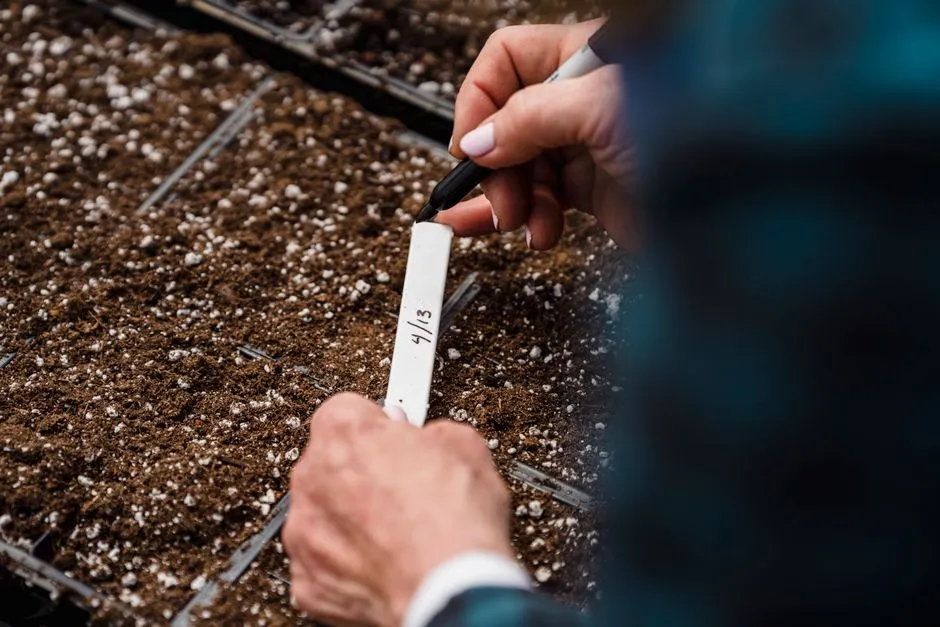
A final tray label can be very simple: plant name, current stage and next check. You do not need an elaborate gardening system. You need enough detail to make tomorrow's decision from what happened today.